From Automated Tasks to Autonomous Workflows: The Next Generation of Business Automation
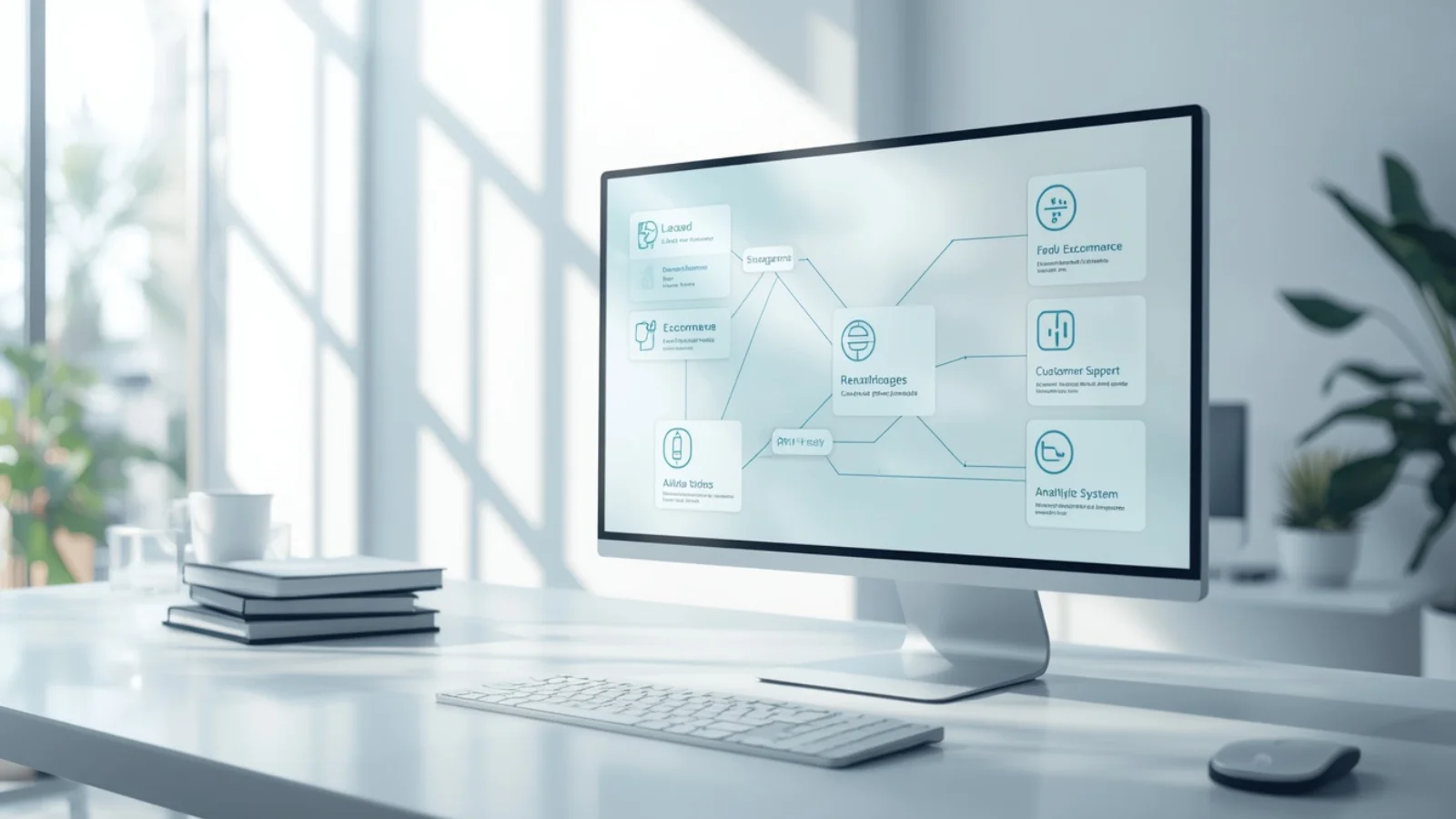
For years, business automation meant making repetitive tasks happen automatically. A customer fills out a form and an email is sent. Someone places an order and the team receives a notification. A new lead arrives and the CRM creates a record.
Those automations are still valuable, and most businesses need more of them. But businesses are no longer looking only to automate individual tasks. They are looking to automate complete processes. That is where autonomous workflows come in.
Instead of simply telling a system what to do when an event occurs, businesses can create workflows that collect information, understand the situation, make decisions with predefined logic and AI, and continue without someone managing every step. This is a larger shift than replacing manual work with automation.
The Difference Between Automation and Autonomous Workflows
Consider a typical lead-generation process. Traditional automation might add a form submission to the CRM, send an email, and notify sales. It is useful, but predictable.
A more advanced workflow can examine the lead’s information, check company details, assess opportunity value, analyse the submitted message, and decide the next step. A high-quality lead can enter a priority sales pipeline. A weaker lead can enter a nurturing sequence. A specific request can be sent directly to the right person.
The workflow is no longer just moving data between platforms; it is helping the business decide what to do with the data.
Why This Matters for Modern Businesses
Most companies already use many tools. An ecommerce business may have Shopify, a CRM, email marketing software, customer support, Google Analytics, ad platforms, and accounting software. These systems often operate separately, and employees become the connection between them.
At a small scale, exporting data, checking it, updating another system, sending an email, and creating a report may not feel like a major problem. As the business grows, however, these small manual processes become expensive. More orders, customers, leads, and data all create more work.
Rather than adding people for every repetitive step, connected workflows can handle these processes automatically and let teams focus on work that needs their attention.
AI Makes Automation More Flexible
Traditional automation works best when instructions are clear: if an order is placed, send an email; if a form is submitted, create a CRM record; if an invoice is paid, update the customer status.
The challenge is unstructured input. Customers write messages differently, leads provide incomplete information, documents vary in format, and support requests can contain multiple issues. An AI model can understand that information and turn it into something a workflow can use.
For example, a customer may explain that an order arrived late and one product was damaged. An AI-powered workflow can identify the issues, extract relevant information, and route the case correctly. The AI does not need to control the whole process; it can handle the understanding while the automation platform handles the rest.
APIs Are the Infrastructure Behind It
APIs let software systems communicate. They make workflows possible beyond a single app. An ecommerce workflow can receive an order from Shopify, retrieve customer information from a CRM, send selected data to an AI model, update an internal database, notify a team, and send a personalised email. Learn how those connected workflows can improve the ecommerce customer experience.
To an employee, this can look like one simple process. Behind the scenes, multiple systems are working together. The focus is shifting from automating individual applications to connecting the whole business operation.
Autonomous Does Not Mean Completely Unsupervised
Autonomous workflows do not have to remove humans entirely. Some decisions are safe to automate; others deserve review. For a refund request, a system can check the order and policy, then continue automatically for a straightforward case. If something looks unusual, it can pause and ask a team member to review it.
This is often the better model: the system handles predictable work, while people handle situations that require judgment.
A Realistic Ecommerce Example
An online store may receive hundreds of customer conversations each week. Without automation, someone has to read every message, identify its purpose, check order details, choose the correct team, and send a response.
An advanced workflow can understand what each customer is asking about, retrieve relevant order information, determine whether it concerns shipping, returns, payments, or product information, and take the appropriate next step. Some customers receive an automated answer, others go directly to support, and important cases are flagged for immediate attention.
The support team retains control but no longer has to manually sort every conversation. That difference becomes substantial as the business grows.
The Best Place to Start
Trying to automate everything at once usually creates unnecessary complexity. Start with one process that consumes time and has a clear beginning and end. Lead qualification, support routing, order notifications, reporting, invoice processing, and internal approvals are all good candidates. Our business automation services focus on mapping and improving these practical processes.
- Map how the process currently works.
- Identify where employees spend time, repeat decisions, or take unnecessary manual steps.
- Build the workflow around the real business process.
- Expand only after it works reliably.
This is more practical than buying a collection of tools first and trying to find a use for them afterwards.
Where Business Automation Is Heading
The next generation of automation will be connected systems that handle complete processes. A lead can enter the business, be analysed, move through the right workflow, and reach a salesperson at the right time. A customer issue can be understood, investigated, and routed without manual sorting. Data can move between platforms while AI interprets information that rules alone cannot.
When human judgment is needed, the system can bring the right person into the process. Autonomous workflows are not merely about doing more with fewer people. They allow technology to handle repetitive operations while people spend more time on decisions, relationships, and growth.